
Four hundred years, one piece of ground
The farm is named after a woman who lived here in 1604
Her name was Ann Goff. Records show her living at this farm at the start of the seventeenth century, and the house she lived in is still the one at the end of the drive.
The farmhouse
A listed house, still lived in
The farmhouse dates from the early 1600s and is Grade II listed: white weatherboarding over brick, a tiled roof gone soft at the ridge, and a chimney stack you can see from the far side of the paddock. It is the first thing you meet coming down the drive, and it is a family home rather than an exhibit.
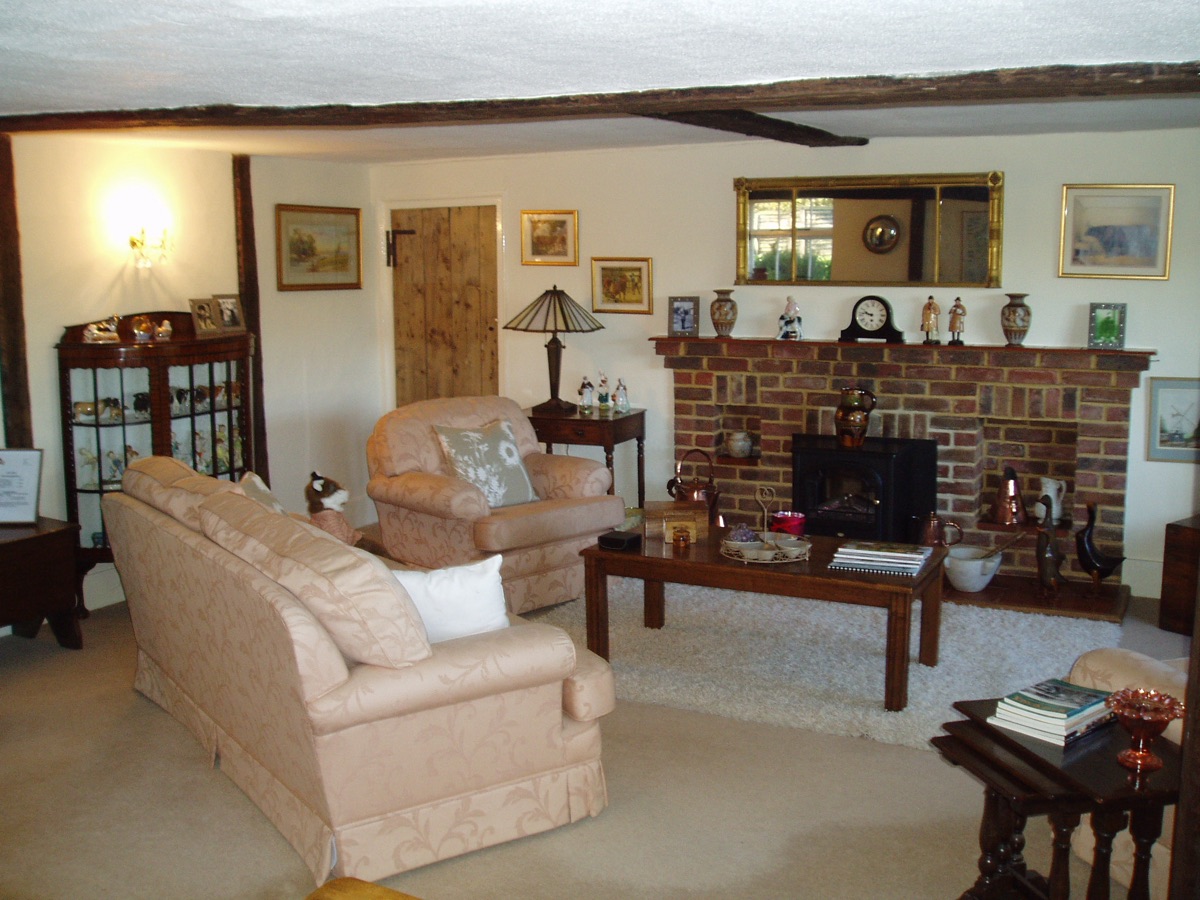
Inside, the ceiling beams and the brick fireplace are the parts that give away the age of it. Four centuries of Sussex farming families have kept the same room warm.
What comes out of the ground
Thimbles, dropped by women gleaning the last ears of corn out of the stubble.
Elizabethan silver, Roman coins, and gleaners' thimbles
Metal detectorists have worked these fields for years, and what they bring up says as much about the farm as any document. Elizabethan hammered silver. Roman coins. And thimbles, dropped by the women who worked along behind the harvest gleaning the last ears of corn out of the stubble, which was a real job and a real right for centuries.
None of it is spectacular treasure. It is better than that: it is the ordinary evidence that people have been growing food on this exact ground for a very long time, and are still doing it. The farm today runs to 250 acres with a pedigree Sussex herd on it.
The farming timeline
Dairy, arable, dairy again, and then Sussex cattle
Seventy years of a small Wealden farm being pushed about by the wider economics of British farming, and adapting each time.
-
1604
Ann Goff
Records show a woman called Ann Goff living at the farm. It has carried her name ever since.
-
1954
A milking herd of fifteen
The dairy herd starts at fifteen cows and is built up steadily towards ninety. The Ayrshires are changed for Friesians along the way.
-
1980
The milking herd is sold
Under an EEC scheme the milking herd goes. The farm changes policy to arable crops and rearing beef cattle.
-
1985
David Liverton takes the tenancy
The tenancy passes from father to son. Carol and David have run the farm since.
-
1990
Back to dairy
A dairy herd returns to the farm, eighty-five Friesian cows this time.
-
1999
The milk price collapses
The milk herd is sold for the second time in twenty years. The farm carries on with arable, sheep and beef.
-
2003
The pedigree Sussex herd begins
The county's own breed comes to Goffsland: deep red, short horned, and suited to this clay. The herd is still the heart of the farm.
-
Now
Both sons farm here
The next generation works on the farm too, on contracting and haylage. The farming year still runs to the cattle and the sheep.
The landlord
The Burrell family of Knepp Castle
Goffsland is a tenanted farm. The land belongs to the Burrell family of Knepp Castle at West Grinstead, a few minutes down the road, and the Livertons have farmed it as tenants since 1985.
The Burrells are better known now for what they did with the rest of the estate. Knepp Wildland is the most famous rewilding project in Britain, and it is close enough to walk part of, which makes it an unusual thing to have as a landlord and an unusually good day out from the pitch.
Read on
Come and stay
Sleep on ground that has been farmed since 1604
Five pitches, open all year, for members of the Caravan and Motorhome Club.